Home › Dust Control and Soil Stabilization
We provide dust control hydroseeding in Austin, TX to stabilize exposed soils on construction sites, laydown yards, and stockpiles. Our hydromulch and tackifier applications help reduce airborne dust and surface erosion. This keeps neighbors happier, improves safety, and helps you stay in compliance with air quality requirements.
Legendary Hydroseeding Austin provides professional dust control hydroseeding throughout Austin, TX, Texas and the surrounding area. Our licensed, insured crew delivers safe, clean, on-time work with a free estimate before anything begins. Call 737-237-0380 or request your free quote.
Dust control hydroseeding that is built for Central Texas conditions
Unpaved roads, stockpiles, and exposed pads in Austin do not just get dusty. They turn into safety issues, code problems, and complaints from neighbors when the wind picks up. Legendary Hydroseeding Austin uses dust control hydroseeding to lock that surface in place with a sprayed-on mulch and tackifier mix that hardens into a protective skin. Instead of chasing dust with water trucks all day, you get a treated surface that holds together through our hot, dry spells and sudden thunderstorms.
Our approach is simple. We look at how the site is used, how long the dust control needs to last, and what kind of soil you have, then design a hydroseeding mix that fits. Short-term construction access road that will be reworked in 60 days gets a different formula than a long-term laydown yard that has to sit stable for a year. We are not trying to sell you a one-size-fits-all green blanket. We are trying to keep fines from lifting into the air and keep your subgrade from raveling under traffic.
Because we work only in Central Texas, we know how caliche, decomposed granite, and blackland clay each behave on real jobs. A mix that works on a flat commercial pad near I-35 may fail on a steep driveway in the Hill Country. We adjust coverage rates, tackifier selection, and application method based on what we see in the field, not just what a manufacturer spec sheet says.
How dust control hydroseeding is actually installed
A good dust control and soil stabilization job starts with surface prep. Legendary Hydroseeding Austin walks the site, checks for ruts, loose trash, and standing water, and has those areas graded or compacted before we ever start spraying. We want a firm, relatively smooth surface because the mulch and binder need intimate contact with the soil to work. On roads and pads that already have heavy traffic, we often recommend a light re-compaction pass with a roller right before application.
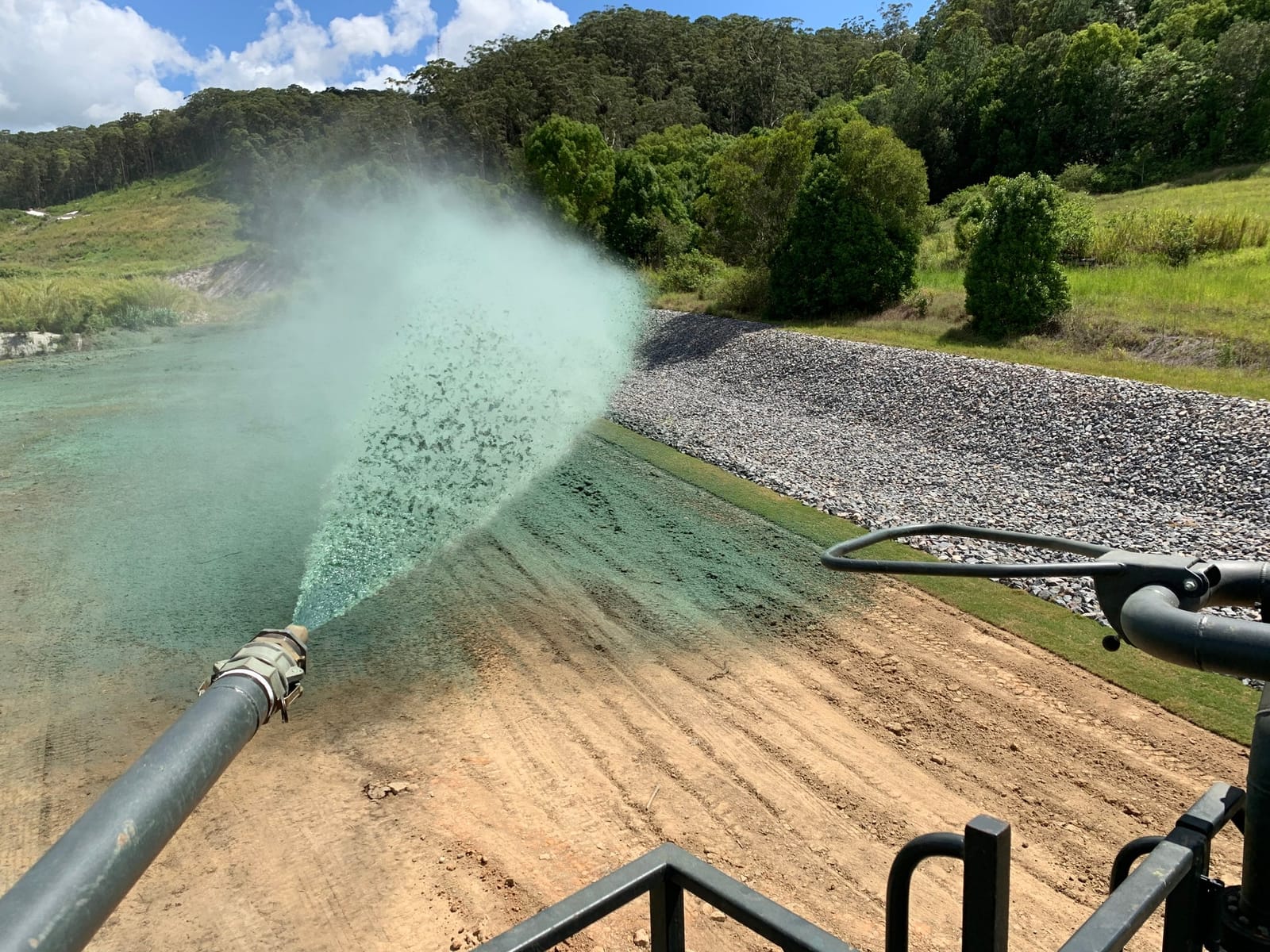
Once the surface is ready, we stage our hydroseeding truck so we can reach the entire work area with hoses or the turret. For sensitive areas near buildings, vehicles, or equipment, we use hose lines so we can put material only where you want it. Open stockpiles or large pads can be covered quickly using the turret from the truck. We calibrate the machine for your job so the mulch, tackifier, and water mix at the right ratios and come out at the specified pounds per acre.
During spraying, we build a continuous mat. That means overlapping passes, watching for thin spots, and paying attention to wind direction. High wind days are common around Austin, so if gusts are too strong we adjust our nozzle pattern, spray angle, or sometimes shift the schedule a few hours to avoid wasting material. When we are finished, we walk key areas with you or your superintendent so you can see how the coverage looks and understand cure time and traffic limits.
Curing is the last step. The tackified mulch needs time to lock together and bond to the soil. In hot, dry weather with some humidity, the surface can crust over in a few hours. Thick applications or cool overcast days may need 24 hours or longer. For heavy-traffic roads, we often suggest keeping equipment and trucks off for at least overnight so the mat does not tear before it sets.
Materials, options, and what drives the cost
With dust control hydroseeding, the mix design matters more than the color. Legendary Hydroseeding Austin uses various wood and paper mulches, different polymer and organic tackifiers, and optional soil binders or fibers. For short-term dust control on a construction entrance that will be disturbed soon, a lighter paper mulch with a standard tackifier is usually enough and keeps the cost down. For longer-term stabilization of a haul road or laydown yard, we lean toward heavier wood mulch and stronger binders that resist traffic and rainfall.
We also offer seed-free dust control mixes. On active industrial yards, some clients do not want vegetation at all because roots can interfere with future work. Others want a soil stabilization mix that will eventually support native grasses. In that case, we can blend in a non-irrigated grass mix suitable for the Austin area, such as buffalograss and sideoats grama, and still include enough tackifier so the surface stays stable while the seed germinates.
Cost is driven by three main things: coverage rate, material type, and site logistics. Steep slopes, long hose runs, poor access, and work around existing structures all increase setup and labor time. Higher application rates and premium binders cost more up front but can save you money compared to constant re-watering or regrading. During a typical Austin summer, watering trucks can run nonstop just to keep dust down. A properly designed hydroseeding dust control layer often pays for itself by reducing that daily expense and lessening the risk of citations for airborne dust.
We are transparent about what you are paying for. Our proposal will spell out the application rate in pounds per acre, what kind of mulch and tackifier we are using, and how many mobilizations are included. If you need different mixes for different parts of the site, such as a heavier treatment on a high-traffic road and a lighter one on side slopes, we can separate those in the pricing so you can make informed decisions.
Common Austin dust problems and how we address them
Central Texas sites see a specific set of dust and stability issues that do not always match what national guidelines assume. Caliche and decomposed granite can turn into talcum-like powder after a few grading passes, then blow across adjacent properties when our south winds pick up. Blackland clay does the opposite. It cracks and heaves when dry, then turns slick and mobile when it rains. Legendary Hydroseeding Austin selects materials and application methods with these soils in mind.
On caliche access roads and parking areas, the main goal is to pin the fines in place and prevent raveling under traffic. We often recommend a heavier binder content and enough mulch to create a flexible crust that can move slightly with the base without shattering. On clay slopes and pads, the focus is on sealing the surface against raindrop impact, which breaks the soil structure and starts erosion, and then holding the crust together during the dry shrink cycle.
Wind is another reality in the Austin area. If you are near the SH 130 corridor, the edges of the Hill Country, or around large open commercial tracts, your site may see strong gusts on a regular basis. We control this by setting coverage rates high enough to form a continuous mat, and by paying attention to slope orientation. Slopes facing the prevailing wind often get a slightly heavier treatment because they see more shear stress. For long ridgelines or exposed stockpiles, we may recommend breaking the area into treated sections with small benches or breaks in grade so the wind cannot run uninterrupted across the whole surface.
Regulatory and neighbor concerns are very real in and around Austin. Dust leaving your property can trigger TCEQ complaints or local code enforcement visits, especially if you are near residential development or busy corridors. Our dust control hydroseeding gives you a documented measure. You can show that a qualified contractor applied a specific stabilization treatment at a known rate, which is helpful if questions come up from inspectors or nearby businesses.
What to expect when you hire Legendary Hydroseeding Austin
Before we bring a truck on site, we gather details about your project. We look at plans, talk with your superintendent or property manager, and ask how long you need the dust control or stabilization to last. For construction projects in Austin and the surrounding cities, we also ask about your stormwater requirements so the dust control hydroseeding can support your SWPPP goals instead of working against them.
On site, we start with a walk-through and mark out work areas and no-spray zones. If your operations have to stay active during the application, we coordinate with your team so we are not blocking access with hose runs or spraying while trucks are entering and exiting. Our crew keeps you updated as we move from one zone to the next so you know what areas are curing and what areas are still open for traffic.
After application, we review maintenance expectations with you. For pure dust control and soil stabilization jobs, maintenance mostly means watching for damage from turning trucks, equipment tracks, or unexpected drainage. If a section is torn up or washed out, we can spot treat that area instead of redoing the whole site. In many cases, a quick patch application along a main entrance or at the low edge of a pad is all that is needed to keep everything performing as designed.
If you are not sure what kind of treatment your site needs, we are happy to give straightforward recommendations. Sometimes the best option is a short-term dust control hydroseeding before a big push of earthwork. Other times, especially near residential areas or long-term commercial pads, it makes more sense to do a more robust stabilization mix that can transition into permanent vegetation. Either way, Legendary Hydroseeding Austin focuses on giving you a surface that stays put, keeps dust on your property, and reduces the time and money you spend fighting the same problems over and over.