Home › Weed Control and Hydroseed Spot Repair
We provide hydroseeding spot repair in Austin, TX to correct bare patches, washouts, and weed infested sections of your lawn. Our team treats problem weeds, prepares the soil, and reapplies hydroseed only where needed. This focused approach restores uniform color and thickness without redoing your entire yard.
Legendary Hydroseeding Austin provides professional hydroseeding spot repair throughout Austin, TX, Texas and the surrounding area. Our licensed, insured crew delivers safe, clean, on-time work with a free estimate before anything begins. Call 737-237-0380 or request your free quote.
Targeted weed control for Austin hydroseeded lawns
Weed control in a hydroseeded yard is not the same as weed control in an old sod or seed lawn. Legendary Hydroseeding Austin focuses on what is happening specifically in your hydroseeded soil and mulch layer so we can fix bare spots and weed problems without setting your new grass back.
We start with a walk-through of your lawn to look for patterns: shady areas that stay thin, high-traffic paths from kids or pets, low spots that stay wet, and edges along sidewalks and fences where heat and reflected light beat up the grass. In Austin, we see a lot of opportunistic weeds like crabgrass, dallisgrass, spurge, henbit, and nut sedge taking over these weak areas. Identifying which weeds you have matters, because some can be spot treated with a selective herbicide, while others really call for scraping out the spot and re-hydroseeding.
Our goal is to keep as much of your healthy hydroseeded turf as possible. That means using the lightest effective weed control first, then reinforcing thin areas with spot repair. In many cases, we can time the work so that we knock back the weeds, give your grass a short recovery window, then come in with fresh hydroseed in the bare spots instead of starting the entire yard over.
How hydroseeding spot repair actually works
Hydroseeding spot repair is a focused way to rebuild damaged or failed sections of your lawn using the same process we use for full installs, just scaled and tuned to each problem area. Legendary Hydroseeding Austin does not simply throw seed on top of thin spots. We rebuild the surface so the new seed has the same advantage your original hydroseed had.
First, we prep the area by trimming or scalping it a little lower than the surrounding turf, so the new hydroseed layer will sit at the same finished grade. If weeds or old grass roots are dense, we physically remove them or lightly till the top half inch of soil. In compacted spots, such as where vehicles parked during a backyard project, we loosen the soil using hand tools or a small core aerator so the new roots can actually penetrate.
Next, we adjust the soil if needed. In many Austin neighborhoods, especially those on the eastern side with heavier clay, we work in a small amount of compost or sand/compost blend to improve drainage and reduce standing water that encourages weeds. For hill country limestone soils, we focus more on adding organic matter and making sure the shallow soil that sits on rock can hold moisture between waterings.
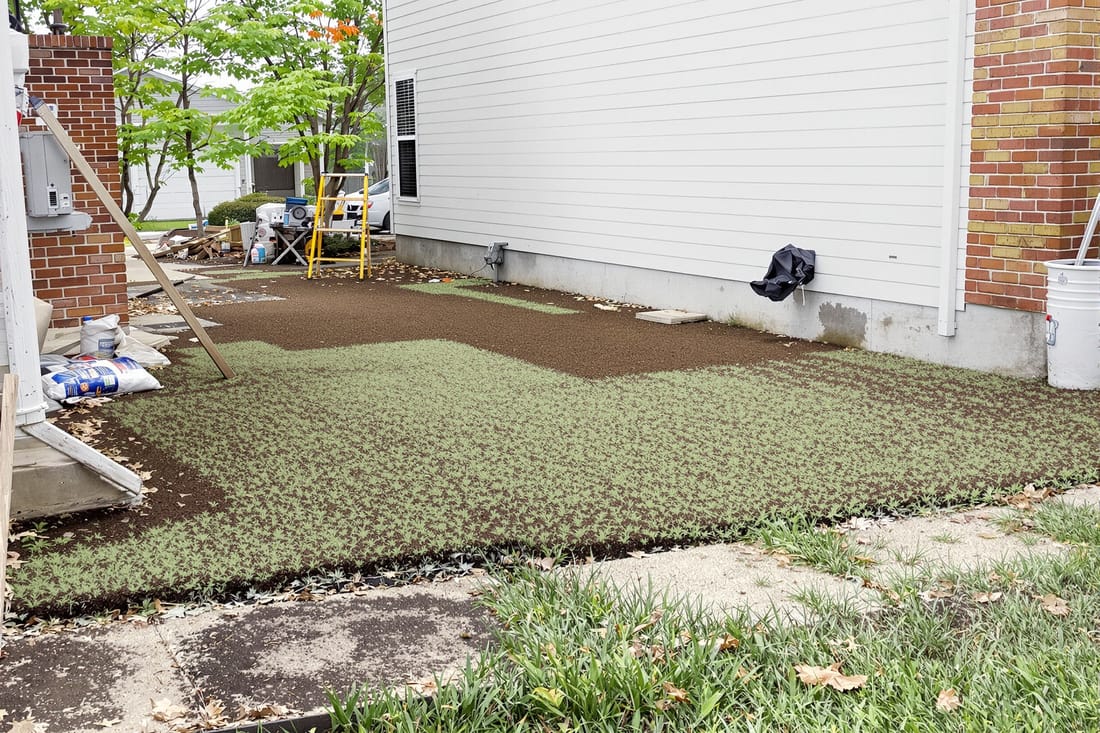
Once the surface is prepped, we hydroseed only the affected spots or zones. We load our tank with the correct seed blend for your yard, tackifier, mulch, and starter fertilizer, then spray a controlled, overlapping pattern to match the surrounding turf line. The result is a uniform look once everything fills in, not random green patches that never quite blend.
Weed control timing, products, and what to expect
Timing and product choice are critical for weed control around hydroseeded turf. Use the wrong material or apply it too early and you can set your grass back months. Legendary Hydroseeding Austin uses a calendar-based approach that is adjusted for the Central Texas climate rather than a generic national schedule.
For yards that were recently hydroseeded, we are very cautious with herbicides. Typically, we avoid most post-emergent sprays until the lawn has been mowed at least two or three times and is actively growing. Before that point, we lean on physical removal in critical areas. For example, we may hand pull or use a specialized tool to extract young nut sedge or clumps of dallisgrass, then follow with spot hydroseeding to close up the bare circle.
In established hydroseeded lawns, we may use selective broadleaf herbicides or grassy weed controls that are labeled as safe for your specific grass type (Bermuda, St Augustine, or zoysia). We apply these as directed spot treatments, not blanket coverage unless the lawn is heavily infested. Many products cannot be used during extreme heat, which we see frequently in Austin summers, so we often plan weed control work in early morning windows and avoid forecasted triple-digit days when possible.
Pre-emergent herbicides are a powerful tool, but they must be coordinated with seeding. If you plan to do hydroseeding spot repair, we schedule any pre-emergent applications so they will not block new grass germination in those repaired zones. In practice, that might mean delaying pre-emergent in specific sections or using a different product with a shorter residual where we know spot repairs are planned.
Common lawn problems in Austin that require spot repair
Austin lawns that were hydroseeded can still develop problem areas, especially under local conditions. Legendary Hydroseeding Austin has seen the same patterns enough times that we can usually tell you what happened and how to prevent it next time.
High heat and watering gaps often cause burn-out patches on south or west facing slopes. These turn straw-colored and then become weed magnets. We typically address this by scraping out the dead material, loosening the surface, adjusting your irrigation settings or recommending a new watering schedule, then hydroseeding spot repairs using a drought-tolerant blend that matches (or strategically upgrades) your existing turf.
Shade transitions are another trouble spot. A full-sun Bermuda mix that does great in your open backyard may thin badly under live oaks along the fence line. In these cases, we may propose a different seed mix for those shaded strips, such as a more shade-tolerant turf-type fescue blend, and then perform targeted hydroseed spot repair only in the shade band instead of the entire lawn.
Traffic lanes from pets, delivery paths to a side gate, or kids cutting across the same corner of the yard will compact soil and wear the grass down to dirt. We correct this by loosening or lightly tilling the path, sometimes adding a small amount of compost, then hydroseeding and guiding you on short-term barriers or temporary paths while the new grass establishes. If the traffic will always be heavy, we may suggest combining spot hydroseeding with a permanent solution such as stepping stones or decomposed granite in the highest wear area.
Finally, construction or pool install projects often leave scattered scars where materials were stored or equipment was staged. We map those scars, verify the soil under them is not contaminated with concrete washout or debris, clean up as needed, and then hydroseed spot repairs so the lawn looks continuous again.
Costs, options, and what affects your price
Weed control and hydroseeding spot repair pricing is based on real conditions in your yard, not a one-size-fits-all package. Legendary Hydroseeding Austin typically looks at four main cost drivers: access, total repair area, soil correction needs, and weed pressure.
Access matters. Small backyard areas that require hoses to be run through a narrow gate or around obstacles take more time than an open front yard. Steep slopes or heavily terraced yards may require extra prep and care while we spray. Total repair area also has a direct impact. A handful of isolated spots that add up to 100 to 300 square feet will cost less than long strips along an entire fence line or large sections damaged by a failed irrigation zone.
Soil correction can be minimal or significant. If the existing soil is in reasonably good shape and we are simply cleaning up weeds and refreshing hydroseed, your material costs are mostly seed, mulch, and fertilizer. If we have to bring in compost, sand, or topsoil to rebuild the surface, that adds both material and labor. Weed pressure affects both the prep time and the need for follow-up. Heavier weed infestations may require more than one visit for control and then spot hydroseeding to fill what is left.
During our estimate, we will walk the lawn with you, point out where we can save you money by focusing only on truly failed areas, and where trying to cut corners will likely waste your budget. You will get a clear breakdown of what we plan to do in each section, what materials are going into your hydroseeded repairs, and what follow-up care you will need to provide after we leave.
How to prepare and what to expect after service
A little preparation on your end helps hydroseeding spot repair and weed control go smoothly. Before Legendary Hydroseeding Austin arrives, we ask that you flag or clearly mark irrigation heads, shallow lighting lines, and any invisible dog fences that might be close to the surface. If possible, mow your lawn one or two days before our visit, bagging or blowing off heavy clippings so we can see the problem spots clearly.
We will walk through your watering system with you, or at least review your schedule, so we can set up the correct irrigation pattern for new hydroseed in repaired areas. Hydroseeded spots usually need light, frequent watering at first, often 2 or 3 short cycles per day, then a gradual taper as the grass establishes. Because Austin is under periodic watering restrictions, we plan this schedule around your allowed watering days and times.
After the spot repair is applied, it is important to keep pets, kids, and mowers off the fresh hydroseed until the first real mowing is due. We will give you a simple calendar for each repaired zone: when to start watering, when to cut back, when you can safely mow, and when we can consider additional weed control if needed. Most customers start to see green in 7 to 14 days, with full blending into the existing lawn over several weeks depending on the season.
We also cover what is realistic. Hydroseeding spot repair is powerful, but it still depends on sun exposure, temperature, and watering discipline. We will tell you if certain shady corners or constantly soggy spots are poor candidates for traditional turf and suggest alternatives so you do not keep paying to repair the same problem over and over.