Home › Soil Testing, Amendments, and Fertilization (Commercial)
We offer commercial hydroseeding soil amendments in Austin, TX starting with soil testing and analysis. Based on results, we apply lime, fertilizers, and organic materials or specify engineered topsoil blends to support healthy turf. Proper nutrient management reduces establishment failures and long term maintenance issues.
Legendary Hydroseeding Austin provides professional commercial hydroseeding soil amendments throughout Austin, TX, Texas and the surrounding area. Our licensed, insured crew delivers safe, clean, on-time work with a free estimate before anything begins. Call 737-237-0380 or request your free quote.
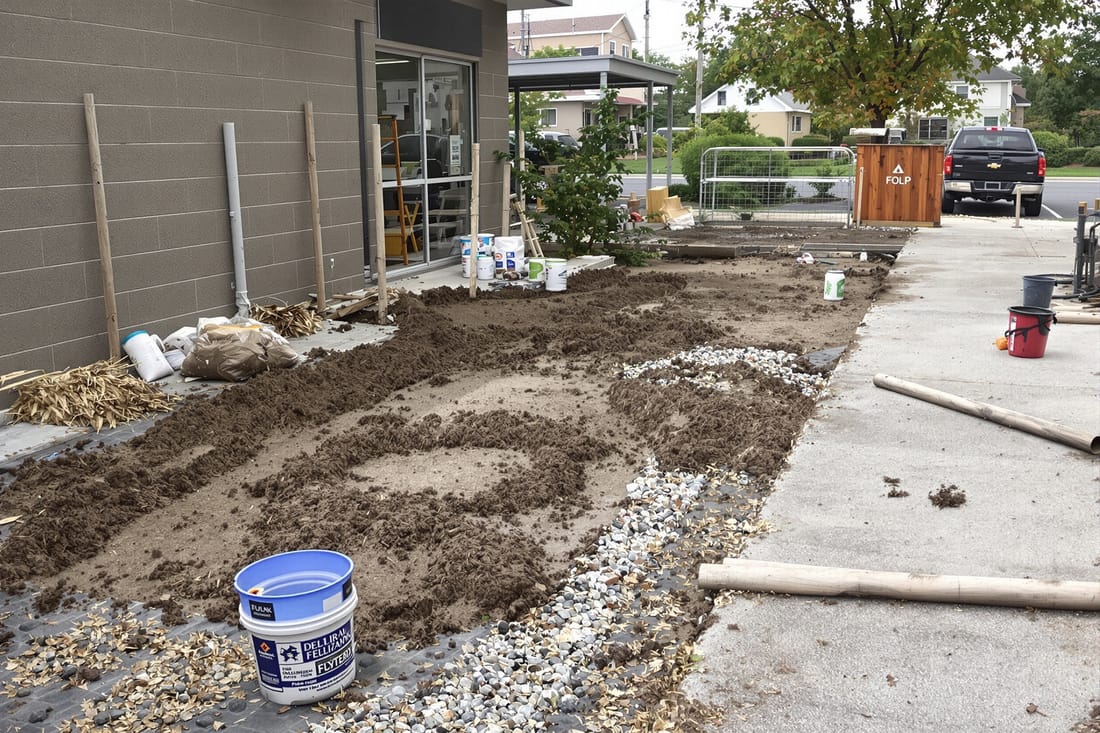
Soil testing tailored for Austin commercial sites
Commercial sites in Austin rarely have uniform soil. One part of your property may be compacted construction fill, another may be thin blackland clay, and a third may be rocky Hill Country loam. Legendary Hydroseeding Austin starts every commercial hydroseeding soil amendments project with a site-specific soil testing plan so you are not guessing with your investment.
We walk the property with you to understand its history, planned use, traffic patterns, and irrigation layout. Then we pull core samples from multiple zones, typically 6 to 10 inches deep, using a soil probe instead of just scraping the surface. On large commercial projects like business parks or athletic fields, we label and track each sample zone so results can be mapped and treated differently if needed.
Your samples are sent to a Texas-based lab familiar with Central Texas soils. We test for pH, organic matter, texture, salinity, cation exchange capacity, and available nutrients like nitrogen, phosphorus, potassium, calcium, magnesium, and micronutrients. For many commercial clients we also request soluble salts and sodium tests, which are important when reclaimed water or high-salt fill dirt may be in play.
Within about a week, we translate the lab data into a clear recommendations report. Instead of a generic “add fertilizer” note, you receive zone-by-zone guidance like “raise pH from 5.6 to 6.5 with 1.5 tons per acre of agricultural lime” or “organic matter at 0.8 percent, target 3 to 4 percent.” This becomes the blueprint for your hydroseeding soil amendments plan.
Designing a practical amendment plan for commercial budgets
Once your soil testing results are in, Legendary Hydroseeding Austin designs a commercial hydroseeding soil amendments plan that fits both the agronomic needs and your budget. Our focus is on solutions that work in Austin’s alkaline-leaning, clay-heavy soils and that can be installed efficiently at scale.
We start by prioritizing the most limiting factors for plant establishment. For many local commercial sites this is compaction and low organic matter rather than just a lack of fertilizer. In that case, we may recommend deep tilling and compost incorporation before hydroseeding, combined with a targeted starter fertilizer in the slurry. On sites with pH issues, such as imported caliche fill with very high pH, we evaluate whether correction is realistic or if we should adjust turf and native seed choices to match the existing soil.
Cost is primarily driven by three things: acreage, existing soil condition, and access for equipment. A relatively clean topsoil layer on a medical office campus can often be amended mostly through the hydroseeding slurry itself. By contrast, a scraped construction pad with rubble, paint wash-out, or heavy truck traffic will need more pre-work like debris removal, rough grading, and deep ripping before amendments can actually work.
We are transparent about what is “nice to have” versus what is “must have” for your goals. For example, a Class A sports field may justify precision nutrient balancing, while a roadside or detention pond might only require correcting the worst deficiencies plus erosion control. Our recommendations are specific, with application rates stated in pounds or tons per acre, so you can compare apples to apples if you collect multiple bids.
Site preparation, grading, and incorporating amendments
Hydroseeding alone cannot fix poor soil structure. For commercial projects in Austin, site prep is where success is really decided. After you approve the amendment plan, Legendary Hydroseeding Austin coordinates with your GC or site work contractor so that grading and soil work line up with the construction schedule.
We begin by verifying final grades, drainage patterns, and finished elevations. Low spots that hold water, steep slopes without erosion control, or swales that have not been shaped correctly will be flagged before any amendments go in. Correcting these early prevents costly washouts during our intense spring thunderstorms.
Next comes loosening and incorporating. For many commercial hydroseeding soil amendments projects we rip or till the top 4 to 8 inches, depending on access and utilities. If the plan calls for compost, lime, gypsum, or topsoil, those materials are spread with tractor-mounted spreaders or hauled in with loaders, then mixed into the loosened layer. On tight urban sites where heavy equipment cannot reach, we may use smaller skid steers or even walk-behind tillers and adjust amendment rates to what can realistically be worked in.
We pay particular attention to high-traffic areas such as building entrances, fire lanes, and play areas. These zones often need extra loosening and more organic matter because they compact again quickly once open to the public. By staging the work and keeping equipment passes to a minimum after tilling, we preserve the improved soil structure until it is time to hydroseed.
Choosing the right amendments for Central Texas conditions
Austin’s climate brings hot summers, periodic drought, and intense but short rain events. Legendary Hydroseeding Austin chooses amendment materials with those realities in mind, not just what looks good on a lab sheet. Our goal is a soil that drains well enough to avoid puddling but holds moisture through stretches of 100 degree days.
On many commercial sites, composted organic matter is the backbone amendment. We typically use STA-certified composts that meet state standards, screened to remove oversize material that could interfere with hydroseeding coverage. Compost increases water-holding capacity in thin or sandy spots and helps break up clay aggregation so roots can penetrate.
Where soil tests show high sodium or crusting, gypsum (calcium sulfate) can be added to help improve soil structure and reduce surface sealing, especially on older fill or areas exposed to de-icers or reclaimed water. If pH is too low, agricultural lime is used. If pH is extremely high, we may not try to change it aggressively and instead focus on organic matter and choosing tolerant seed varieties.
For nutrient amendments, we rely on a mix of granular pre-plant fertilizers and water-soluble products in the hydroseeding slurry. Slow-release nitrogen sources are favored for long-term feeding under heat stress. Phosphorus rates are carefully calculated because of local watershed regulations and the risk of runoff into Austin creeks and retention ponds. Where micronutrients like iron or zinc are low, foliar or chelated forms may be recommended during the first year of maintenance.
Fertilization strategy from seeding through establishment
Hydroseeded turf or native mixes need a very different feeding schedule than an existing lawn. Legendary Hydroseeding Austin builds a fertilization program around your soil test results, turf type, and project timing so you get fast establishment without surge growth that is impossible to mow or water.
Before or during hydroseeding, we typically apply a starter fertilizer calibrated in pounds of actual nitrogen, phosphorus, and potassium per acre. This may be partially in granular form incorporated into the topsoil and partially in the hydroseeding tank for even distribution. For example, a commercial Bermuda athletic field might receive 1 pound of nitrogen, 0.5 pounds of phosphorus, and 1 pound of potassium per 1,000 square feet over the first 6 weeks, split into multiple light applications.
Because Austin summers are harsh, we often recommend front-loading phosphorus and potassium for root strength in spring or fall installations, with lighter nitrogen applications during peak heat. On large properties with central irrigation, we can coordinate with your irrigation contractor to apply some nutrients through fertigation, which reduces labor and keeps traffic off soft ground.
We provide a written fertilization calendar through the first growing season that includes product types, rates, and timing. This is geared to commercial maintenance crews, not homeowners, so it is specific about spreader settings, truck load-out, and what weather conditions to avoid. If you prefer, our crew can handle the critical first few feedings, then hand off to your landscape maintenance vendor with clear instructions.
Common Austin soil problems and how we handle them
Years of commercial construction in Austin have left many sites with challenging soils. Legendary Hydroseeding Austin has seen it all, from parking lot islands backfilled with rubble to detention ponds with slick, compacted clay. We build solutions around the specific issues we find so your hydroseeding money is not wasted.
Compaction is by far the most common. Heavy equipment and repeated grading passes can create a hardpan layer that roots cannot penetrate. We address this with deep ripping where possible, cross-tilling to break directional compaction, and adding organic matter to hold the gains. On some highly constrained sites, we will recommend a slightly shallower root-zone system coupled with drought-tolerant species and more robust irrigation design.
Another frequent problem is inconsistent imported topsoil. Some loads are rich loam, others are sandy or full of debris. We visually inspect and, when warranted, spot-test topsoil deliveries. If a batch is clearly inferior, we will work with your GC to reject or re-blend it before hydroseeding begins.
Slopes and drainage are also critical in Central Texas storms. A steep slope with bare clay will erode quickly, even with seed in place. Where needed, we pair our commercial hydroseeding soil amendments with erosion control blankets, bonded fiber matrices, or temporary check structures in swales. This prevents the amended top layer from washing away before roots knit the soil together.
By addressing these common problems up front, we reduce call-backs, washouts, and dead patches, which protects your schedule and your reputation with tenants or buyers.
Why commercial property owners and GCs choose us
Legendary Hydroseeding Austin focuses on commercial projects in and around Austin, so we understand the pressures of schedules, inspections, and long-term maintenance obligations. Our commercial hydroseeding soil amendments work is built to satisfy landscape architects, inspectors, and property managers at the same time.
We coordinate closely with your project team. That often includes attending jobsite meetings when soil work is on the agenda, flagging conflicts between plans and field conditions, and providing documentation for LEED credits or local compliance when soil quality standards are specified. Our test reports and amendment records can be included in closeout packages to show that the soil profile was constructed as designed.
Because we handle soil testing, amendment design, site prep support, hydroseeding, and early fertilization as a connected process, you avoid the finger-pointing that happens when multiple subcontractors split the responsibility. If a problem arises, you have one local company to call, and we are on site to diagnose and correct it instead of arguing over scope.
Most importantly, we design for the long term. A property that establishes slowly or fails in patches costs you in warranty work, tenant complaints, and extra maintenance. By investing in the right soil testing, amendments, and fertilization strategy upfront, you gain a landscape that can withstand Austin’s weather swings and heavy commercial use with fewer surprises in the years ahead.