Home › Stormwater Swale and Rain Garden Hydroseeding
We provide swale hydroseeding in Austin, TX to vegetate stormwater channels, rain gardens, and drainage ditches around homes. Dense turf and native mixes help slow runoff, filter water, and reduce erosion. Our team shapes the swale, selects appropriate seed, and applies hydroseed for long term stormwater performance.
Legendary Hydroseeding Austin provides professional swale hydroseeding throughout Austin, TX, Texas and the surrounding area. Our licensed, insured crew delivers safe, clean, on-time work with a free estimate before anything begins. Call 737-237-0380 or request your free quote.
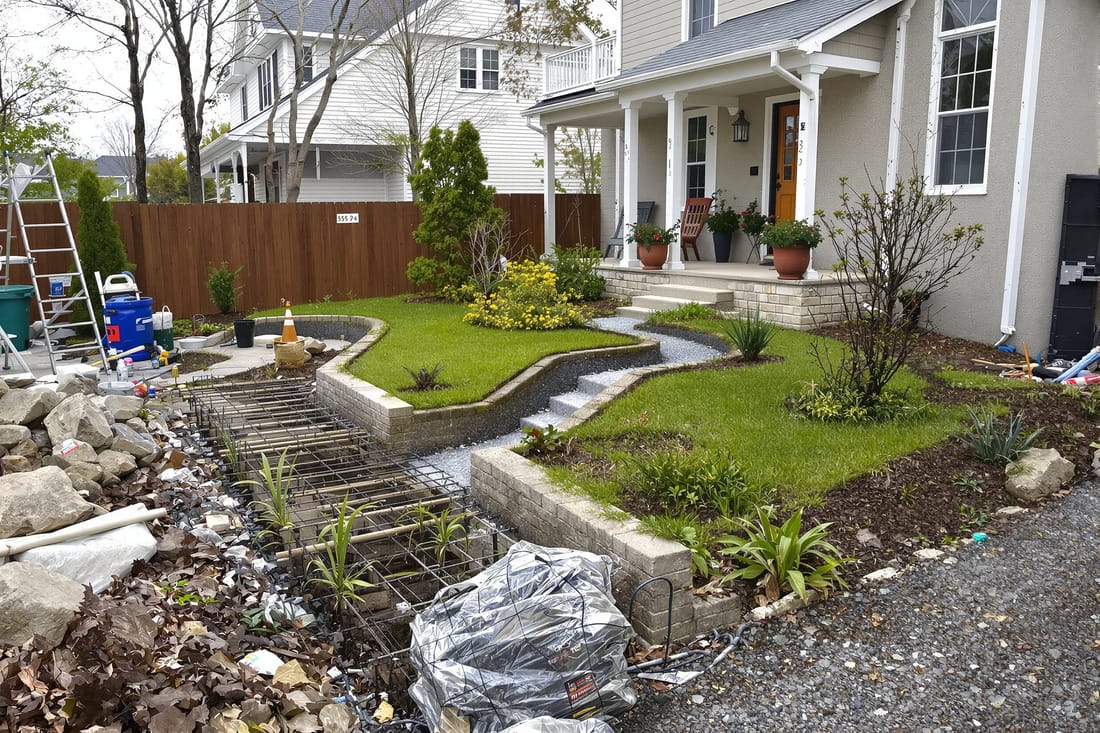
Stormwater Swale & Rain Garden Hydroseeding in Austin, TX
Stormwater swales and rain gardens in Austin have a tough job. They have to move or hold water during intense thunderstorms, then sit dry and baked in the sun for weeks. At Legendary Hydroseeding Austin, our swale hydroseeding work is built around that Central Texas reality, not a generic national spec.
Hydroseeding is a way to apply seed, mulch, fertilizer, binders, and soil amendments in one uniform slurry. For swales and rain gardens, the mix is different from a regular lawn. We choose grass and native plant blends that can handle fast-moving water, clay-heavy soils, and long dry periods. We also increase mulch and tackifier rates so the mix actually stays put during a storm.
We regularly work on residential drainage swales, HOA common areas, small commercial parking lot bioswales, and retrofit rain gardens that must pass city or engineering inspections. If your project is tied to a City of Austin drainage requirement or a TCEQ stormwater plan, we can follow your engineer’s seed specs and provide application records for signoff.
Whether you are fixing erosion in a backyard swale in Circle C or vegetating a new rain garden in East Austin, our goal is simple: get durable, dense vegetation growing quickly so your drainage feature works as designed and stops washing out.
How Swale Hydroseeding Works Step by Step
Every swale hydroseeding job we do follows a clear sequence so the seed has the best chance to establish.
1) Site walk and drainage review: We start with a walk-through to see how water actually moves through the property. In Austin, we pay close attention to upstream hardscape, downspouts, and how quickly heavy clay soils drain after a storm. For engineered swales, we review the grading plan and any specified vegetation types.
2) Grade and soil prep: Hydroseeding will not fix a poorly graded swale. If needed, we coordinate with your landscaper or grading contractor to check slope, ensure there is a defined low point, and remove low spots where water could stand. We lightly scarify the surface, pick out large rocks and construction debris, and, on highly compacted sites, recommend ripping or tilling the top few inches so roots can penetrate.
3) Mix selection and batching: For stormwater swales we typically use a deep-rooted turf blend that might include Bermuda, buffalo, or native mixes, plus erosion-tolerant cover crops for quick temporary cover. For rain gardens, we can seed native grasses and forbs around planted shrubs and perennials, matching Austin-friendly species like little bluestem and black-eyed Susan if your design calls for them. We batch the slurry on site so we can adjust rates for steep zones or inlet areas.
4) Hydroseeding application: Using a mechanical agitation hydroseeder, we apply a pressurized spray that covers the soil fully without leaving bare spots. On steeper side slopes or around culverts, we may make two passes with higher tackifier rates to resist washout. If the project includes check dams or rock energy dissipaters, we carefully spray right up to those edges without filling them.
5) Post-application care and follow-up: Before we leave, we walk you through watering guidance, foot traffic restrictions, and what “normal” germination looks like for your chosen seed mix. We schedule a quick follow-up check in the first month. If we see bare streaks from an early storm, we can spot-treat those areas while the project is still fresh.
Swale- and Rain-Garden-Specific Mixes, Materials, and Design Choices
Stormwater features in Austin are not one-size-fits-all. Legendary Hydroseeding Austin selects mixes and materials based on your exact conditions, not just a standard lawn recipe.
Seed options: For high-flow swales that stay mostly dry between storms, we often recommend a Bermuda-based blend for fast coverage and durability, sometimes combined with rye for quick green-up if your project is in a cooler month. For low-lying rain gardens that hold water briefly, we may add native sedges or moisture-tolerant grasses around planted perennials so the soil surface locks up quickly instead of crusting and eroding.
Mulch and tackifiers: In Austin’s intense downpours, mulch depth and binder rates make a big difference. We commonly use wood fiber mulch on flatter areas and a heavier or blended mulch on slopes and inflow zones. For outfall areas or steep banks, we increase tackifier (the glue-like binder) to keep the mulch and seed anchored during the first few storms. On extremely vulnerable slopes, we might pair hydroseeding with erosion control blankets for belt-and-suspenders protection.
Soil amendments: Many Austin sites have thin topsoil sitting on caliche or heavy clay. To encourage root growth, we may add soil conditioners, composted organic material, or soil penetrants in the hydroseed mix, and sometimes recommend light surface compost before we spray. Where city specs require low-phosphorus fertilizers to protect waterways, we select stormwater-safe products that still support early growth.
Design coordination: If you already have a landscape architect or engineer, we match their plant list and coverage requirements. If you do not, we can suggest practical mixes that balance erosion control, appearance, and maintenance, for example a low-mow native grass mix around a decorative rain garden with flowering perennials.
Costs, Permits, and What Affects Price in Austin
Swale hydroseeding pricing in Austin depends on more than square footage. Knowing these factors up front helps you budget realistically.
Access and equipment: If we can easily park and run hose to the swale or rain garden, costs stay lower. Tight backyards with no side access, steep slopes, or areas that require additional hose runs and hand work add time and labor, which affects the price.
Site condition and prep needs: A clean, graded swale or rain garden basin is the most economical to seed. If we need to correct uneven grades, remove heavy construction debris, or coordinate decompaction, that work will be accounted for. Some homeowners choose to handle rough grading themselves, then bring us in purely for the hydroseeding phase.
Mix type and application rates: Specialty native blends, stormwater-compliant fertilizers, higher mulch depths, and elevated tackifier rates for erosion-prone areas all cost more than a basic lawn mix. Projects that include both normal turf areas and reinforced swale sections will show two different application rates on the proposal.
Permits and documentation: In many residential situations, no special permit is needed just for hydroseeding. However, if your project is part of a City of Austin site plan or a commercial development, your engineer may require specific seed blends, installation on a certain schedule, and photo or log documentation. Legendary Hydroseeding Austin is familiar with those requirements and can provide application records to support inspection or TCEQ stormwater compliance.
We provide clear written estimates that separate site prep, hydroseeding, and any erosion blanket work so you can see exactly what you are paying for and decide what you want us to handle versus what your general contractor or landscaper will do.
What Austin Homeowners Should Expect After Swale Hydroseeding
The first few months after hydroseeding are when your swale or rain garden transitions from bare dirt to a stable vegetated system. Knowing what to expect makes that period less stressful.
Watering schedules: In Austin, new hydroseeded swales typically need light, frequent watering at first, unless you happen to catch a stretch of gentle rain. We usually recommend short cycles that keep the surface moist without causing runoff. Overwatering a swale can wash seed from high spots to low spots, so we help you set a schedule or coordinate with your irrigation contractor if spray heads or drip lines are involved.
Germination timelines: Depending on the season and mix, you may see the first green haze within a week, with coverage filling in over 4 to 8 weeks. Deep-rooted natives take longer but pay off with durability. We tell you which species should appear first so you can distinguish seedlings from early weeds.
Mowing and maintenance: Swales and rain garden edges cannot be mowed like a flat lawn right away. For most installations, we recommend holding off on mowing until grasses reach 4 to 6 inches and are well rooted. When you do mow, use a higher setting and be careful around inlets and rock structures. Hand pulling aggressive weeds early is better than letting them go to seed.
Common problems and fixes: In Austin, the most common issues are isolated washouts after a big storm, sprinkler overspray that erodes banks, or foot traffic that compacts a still-soft surface. Legendary Hydroseeding Austin shows you how to spot these issues early and, if needed, can return to touch up bare patches or adjust tackifier or mulch depth in trouble spots. Our goal is a stable, functional swale or rain garden that keeps doing its job long after the green-up phase is over.